Bonjour! Ca va? I hope you’ve all been keeping well and staying warm through the last of the winter days. We had a glimpse of Spring last week and it was beautiful. I spent those four days of sunshine in the garden and sorting through sheds with hubby, it was perfect gardening/yard work weather. However, we’re now back to grey skies, cold days and nights and lots of rain, at least for the next week before Spring teases us once again.
Today I wanted to touch on a subject that doesn’t seem to get a lot of attention in the upcycling furniture world and that is about finding lead paint on your piece you’ve just bought or been given.
Now, you might be wondering, how would I even know if my piece has lead paint on it? And that’s a great question and I’m going to help you figure it out because honestly I hadn’t even given it a thought until I was talking to a friend about my Grandfather’s toolbox and she pointed out that because of it’s age (around 75yrs old) it was probably lead paint. Her observation led me to stop, think and assess what else had I possibly worked on that contained lead and I wasn’t even aware of it. Which then led me to doing research on lead paint.
So lets go back in time and do some history shall we and see when lead paint was introduced.
Lead paint has (was) been around since almost the dawn of time. Lead white paint can be traced back as far as the 7th Century BCE in China and by the 5th Century BCE was being produced in vast quantities by Egypt, Greece and Rome. Aside from white lead, there is also red lead and chrome yellow that were mass produced and used for artistic purposes as well as for house paints and were used for their durability and ability to inhibit corrosion. And while these traditional paints were used it wasn’t until centuries later the health risks with using them were understood and many countries started to ban lead paint and to phase it out completely especially from artistic paints and household paints.
In fact I was listening to Annie’s (Annie Sloan) podcast The Colourist during the week about Emperors Silk which is a beautiful red paint that Annie was inspired to create based on 18th Century Chinese bureaus, desks and cabinets with Chinese figures on them that had been lacquered. And as the episode goes on Annie talks about the process of how the lacquering was done and how the red pigment was made from mercury, sulfur and resin from a tree. This particular process was happening in 8th Century China, so it just goes to show that these very toxic practices have been around for quite some time. Unfortunately the health risks for lacquering and lead paint weren’t know about until several centuries later.
Back to modern day times, lead paint was widely used as we’ve covered but around the early 1900’s the health risks were being realized when people were dying from lead poisoning linked to paint in homes and on childrens toys. By the 1920’s some countries were banning the use of lead paint in homes on indoor surfaces and on childrens toys. Let’s face it babies and toddlers chew on everything so no wonder they moved to have it removed from their toys. And up until the late 1950’s the majority of childrens toys were made from wood not plastic, hence why the toys were painted.
By the 1940’s the amount of lead being used in paints was starting to be reduced in interior paints in the U.S. However, there was still a very real concern by health workers leading to legislation to have lead removed to protect workers using these paints. In 1969 Australia introduced national legislation that restricted the amount of lead used in paints which lead to further reduction by the 1970’s of low or lead free paint. Despite these bans coming into place many homes built in Australia before 1978 still contained/contain lead paint making it a health hazard as it deteriorates with age or being removed when homes were/are being renovated. In 1992 the limit of lead allowed in paint was reduced to 0.25% however it was reduced again in 1997 to 0.1% which is classified as banned. However being as 0.1% lead is allowed in paint it’s not technically a total ban but a restriction and one that is now taken very seriously. Because there are still so many older homes all around the world that contain lead paint then proper precaution must be taken when renovating a home to minimize the chances of inhaling the dust from the contaminated paint.
With our history lesson over lets get back to furniture. Why are we looking at homes if we’re talking about furniture? Because artists paint as I mentioned earlier have been around for centuries that contain lead and many cultures paint furniture to decorate as we do today so it pays to be careful when buying an old piece of painted furniture.
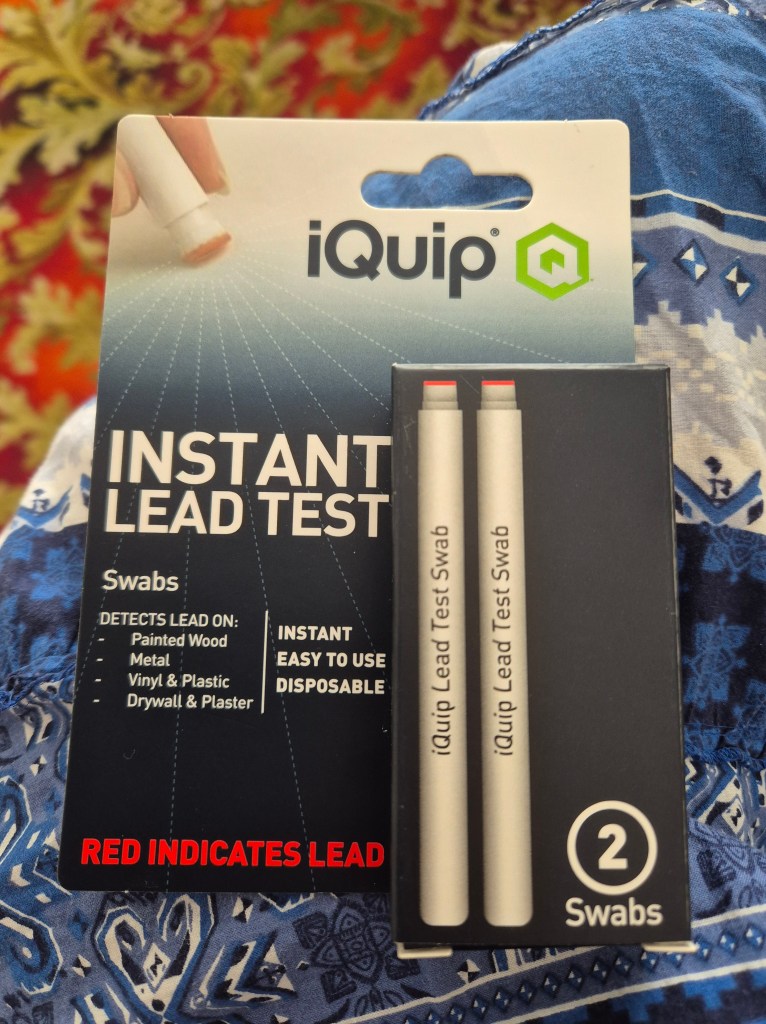
But Michelle, how would I know if my piece is covered in lead paint? That’s a great question and really the best rule of thumb is that if your piece is painted and it’s from a time period before the year 1997 there’s a very real chance it has lead paint on it. Another thing to keep in mind is that older stains/varnishes can also contain lead. But back to paint. If you’re concerned your piece has lead paint then there are lead swab kits you can buy to test the paint. They’re very easy to use and will tell you within seconds if lead is present. Some kits are quite expensive as was the one I purchased but I’ve since found other products that are more affordable and give accurate results. The one I used was from my local paint store here in Perth and retails at $60 for two tests and while I understand that is an investment in itself I feel if you have real concerns about lead paint and are thinking to sand a piece then it’s worth the cost when it’s your health at risk.

There are ways to remove lead paint safely. There is no reason to throw a piece out simply because it tests positive for lead. However, there are precautions to take to minimize exposure either by absorbing it through the skin or from inhaling it. One of the safest options would be to use paint stripper as this will remove the paint without the worry of dust but be sure to wear a mask and any other protective gear suggested by the manufacturing company. The next safest (in my opinion) would be to used a heat gun and a metal scraper to remove the paint. The heat gun will melt the paint and you will be able to scape the paint off and it should come away in biggish flakes. Now while this is a little more messy than stripping it is still much safer than sanding a lead covered piece and the dust that comes with it. Also, as when prepping any piece make sure to wear a mask and a long sleeve shirt, safety glasses and gloves when using stripper and I quite often will wear a hat when sanding to minimize the dust getting in my hair. The more you protect yourself the more you minimize you’re exposure and therefore you will minimize health issues further down the road.
As a furniture upcylcler, finding lead paint is not the end of the world, it’s simply a hiccup in the prepping process and once removed (safely) you can continue on your way revamping the piece and giving it a second chance at decor life. That’s what I intend to do with my Grandfather’s toolbox. Now I’ve confirmed the paint has lead I’m simply waiting for a nice warm day to get outside and strip the paint off and then bring it back to life. I will be sharing this project on Instagram and I might just have to do a post about it here on the blog too. So, if you’re concerned that something you have contains lead, don’t throw it out. Invest in some lead swabs and go from there. Personally I think it’s always better to give a piece of furniture a second chance rather than the whole thing end up in landfill which ultimately results in an even bigger problem. But that’s a topic for another day.
Remember, If you have any questions or comments about any of my posts or you’re needing some advice or tips on a piece then feel free to leave a comment below and I’ll get back to you. Have a lovely day, stay tuned and I’ll be back soon.
À bientôt….Michelle x

 Revamped Revived Reloved
Leave a comment